What Makes an Amazon Purchase Tax-Deductible?
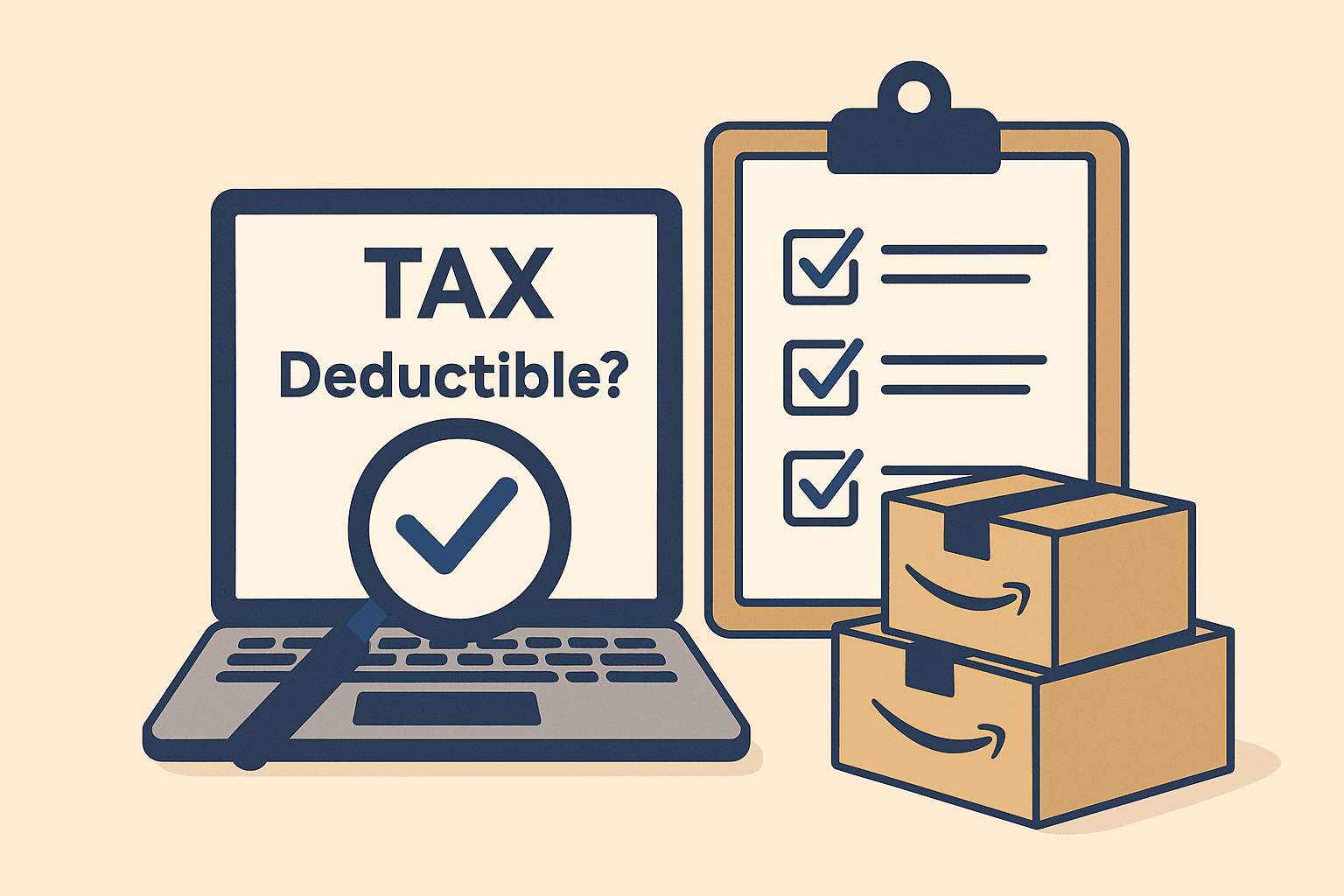
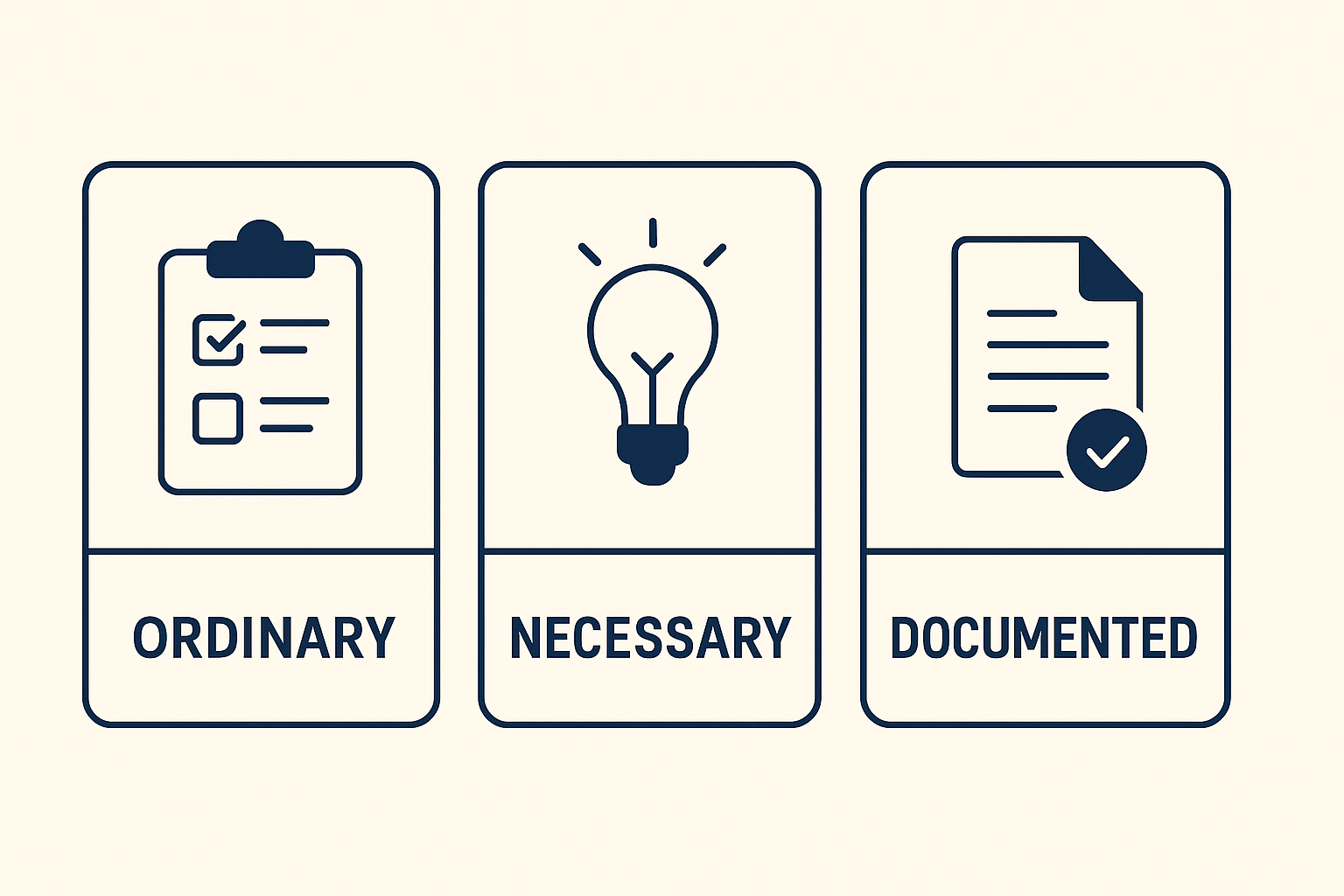
For an Amazon purchase to potentially qualify as a tax-deductible business expense, it generally needs to meet two criteria established by the IRS: the expense should be "ordinary" (common and accepted in your trade) and "necessary" (helpful and appropriate for your business). Additionally, proper documentation is essential—without records showing what was purchased and how it relates to the business, supporting a deduction becomes difficult.
This guide explains the factors that may make Amazon purchases deductible, why Amazon presents unique documentation challenges, and how to approach categorization.
Already understand the basics? See how Purchase Deductions can help organize your Amazon orders →
Why This Is Confusing
Understanding what makes an Amazon purchase potentially deductible involves several complicating factors.
The "ordinary and necessary" standard is subjective
What's ordinary for one business may not be for another. A ring light is an ordinary expense for a video content creator but might not be for a tax preparer. Context matters.
Documentation requirements are often unclear
The IRS expects clear records, but there's no single format required. Business owners often wonder what level of documentation is sufficient.
Amazon wasn't designed for tax purposes
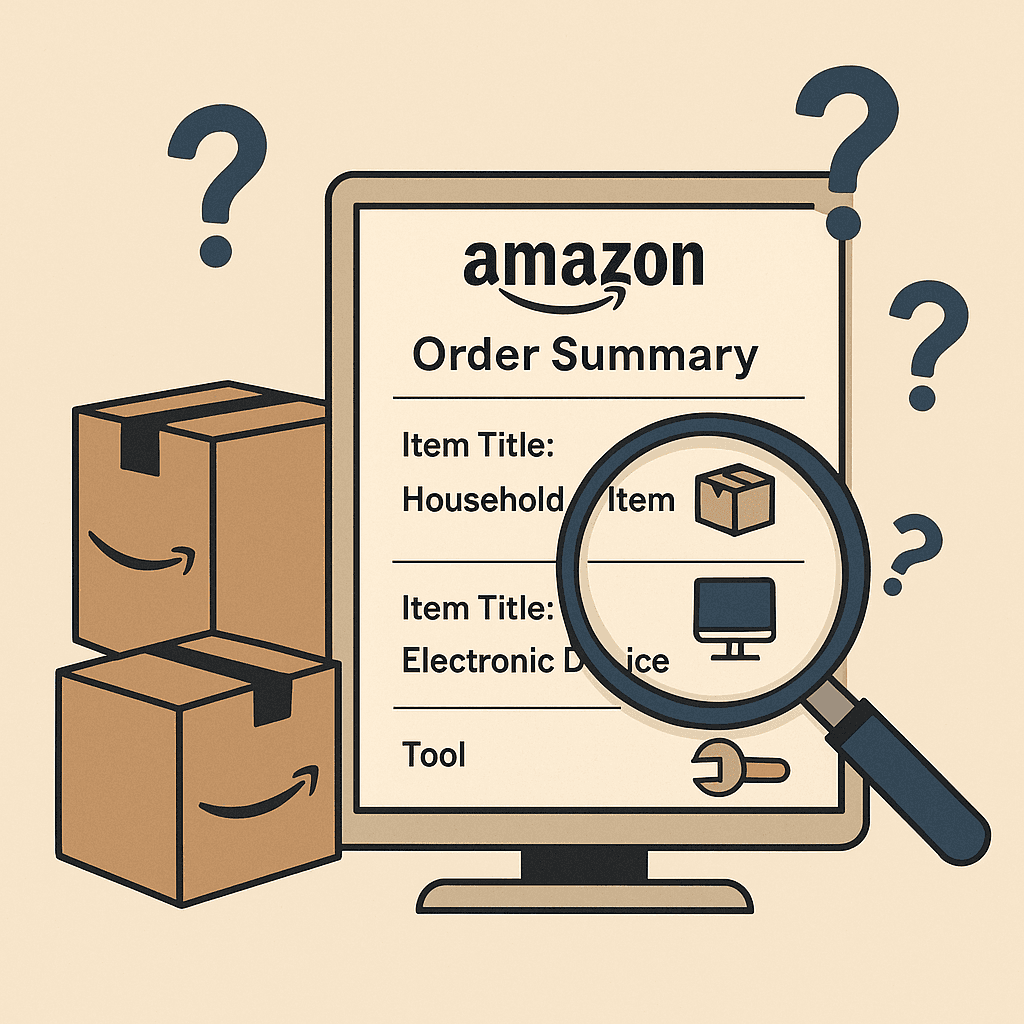
Amazon receipts use product categories and descriptions that don't align with IRS expense categories. A webcam might appear as "Electronics" rather than "Business Equipment."
Mixed-use items complicate things further
Many purchases—like a laptop or office furniture—might be used for both business and personal purposes, requiring allocation decisions.
When Amazon Purchases Could Be Deductible
Certain types of Amazon purchases may qualify as business expenses when used appropriately. Here are some hypothetical examples:
Office supplies and materials
If a freelance consultant purchases notebooks, pens, printer paper, and organizational tools that are used for client work, those items may qualify as ordinary office expenses. Learn more in our comprehensive guide on office supplies deductions from Amazon.
Technology and equipment
A business owner who purchases a microphone, webcam, or computer monitor for virtual meetings and work tasks may be able to treat those as business equipment—assuming they're used primarily for business.
Packaging and shipping supplies
For someone running an ecommerce business, boxes, tape, bubble mailers, and shipping scales purchased through Amazon would typically be considered direct business expenses.
Educational materials
If a professional purchases industry-specific books or training materials to improve their skills, those purchases might qualify as business education expenses. For specific guidance on book deductions, see Can I Deduct Books I Buy on Amazon for My Business?.
Home office furniture
A self-employed individual who sets up a dedicated workspace and purchases a desk or chair may be able to include that furniture as a business expense—assuming the home office meets relevant requirements. For detailed information about office furniture deductions, read our guide on standing desk tax deductibility.
When Amazon Purchases Are NOT Deductible
Many Amazon purchases would not qualify as business deductions:
Personal items
Household cleaning products, personal care items, groceries, and other personal purchases are not business expenses, regardless of whether they're ordered from a business Amazon account.
Items without clear business connection
Even if something seems work-related, without a clear connection to generating income or performing business activities, it may not qualify.
Primarily personal-use items
If a tablet or laptop is used mainly for personal activities with only incidental business use, the business portion would be limited and difficult to substantiate.
Purchases without documentation
Even legitimate business purchases may be challenged if there's no documentation showing what was purchased and its business purpose.
How to Document Amazon Purchases
For any Amazon purchases that might be claimed as business expenses, maintaining good records is essential.
Keep complete order records
Amazon order history provides dates, item descriptions, and amounts. Downloading this data creates a foundation for documentation, though item descriptions may need clarification.
Add business purpose notes
For each potential business purchase, noting how it's used for business strengthens documentation. "Webcam for client video calls" is more helpful than just "webcam."
Categorize purchases properly
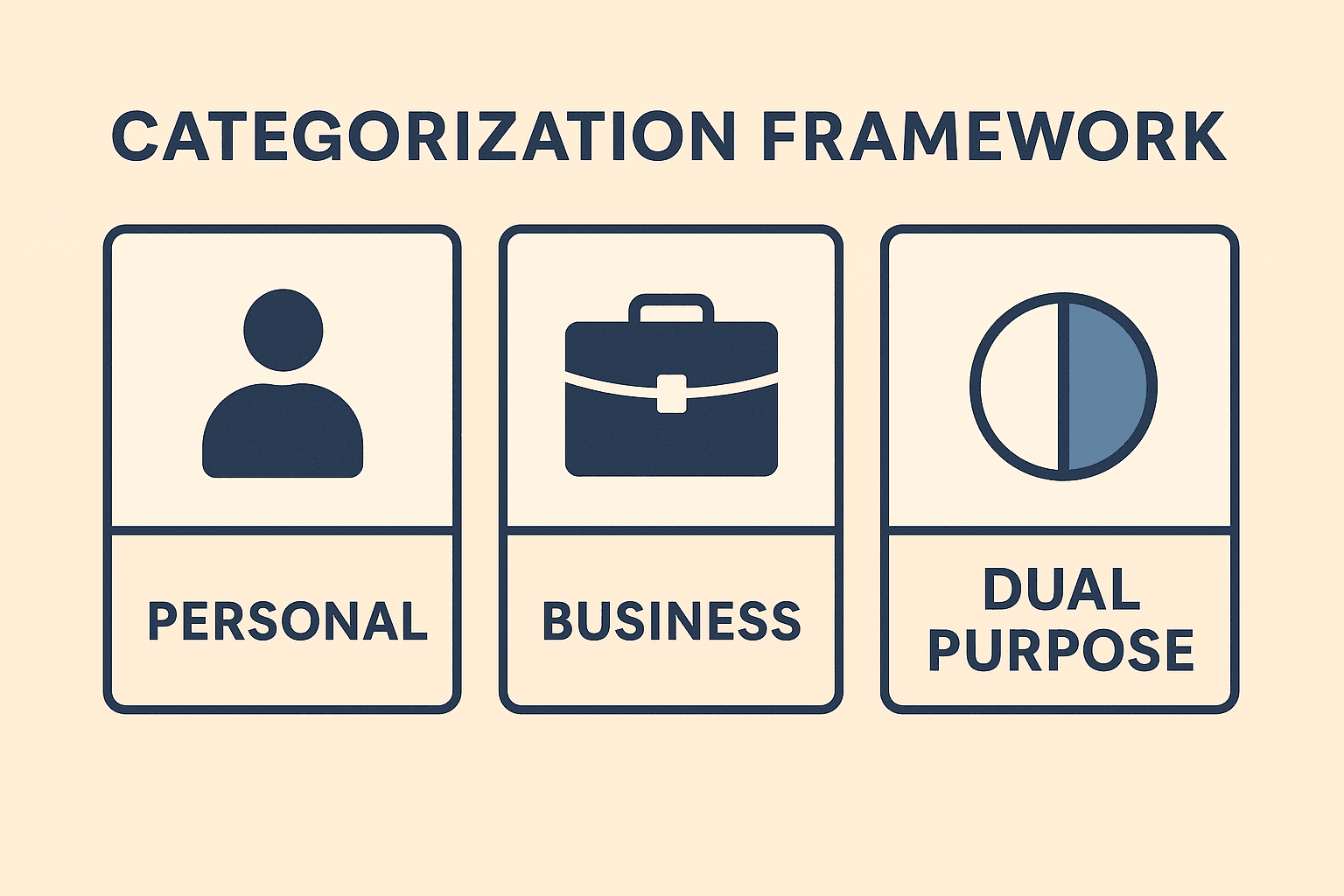
Assigning purchases to appropriate expense categories (office supplies, equipment, professional development, etc.) makes tax preparation smoother and demonstrates thoughtful record-keeping.
Document mixed-use allocations
If an item is used for both business and personal purposes, documenting how the allocation was determined provides support if records are ever reviewed.
Common Mistakes
Assuming order totals are deductible
When an Amazon order contains both business and personal items, only the business items may be deductible. Each line item needs to be considered individually.
Relying solely on Amazon's descriptions
Amazon's vague product names ("Electronics," "Home & Kitchen") don't provide sufficient detail for tax purposes. Additional documentation of what the item actually is and how it's used helps.
Inconsistent treatment of similar purchases
Treating similar purchases differently throughout the year creates confusion. Applying consistent categorization criteria makes records more defensible.
Waiting until tax season to categorize
Reviewing a full year of Amazon orders at once is overwhelming and increases the chance of errors. Categorizing purchases throughout the year is more manageable.
Overlooking legitimate deductions
Without systematic review, business purchases scattered among personal orders may be overlooked entirely.
Organize your Amazon purchase data
Purchase Deductions analyzes your order history and helps identify which purchases may be business-related, making categorization more manageable.
Get StartedHow Purchase Deductions Helps
Manually reviewing Amazon orders to identify potential business expenses is time-consuming. Purchase Deductions automates parts of this process:
- Scans complete Amazon purchase history
- Extracts item details from orders
- Identifies purchases that may be business-related
- Highlights items that need additional review
- Organizes data for tax preparation
This helps business owners understand their Amazon purchasing patterns and focus their attention on items that warrant further consideration.
FAQ
Does meeting "ordinary and necessary" guarantee a deduction?
No. The expense must also be properly documented, and the taxpayer must actually be engaged in a trade or business. The criteria provide a framework, but application depends on specific circumstances.
What if an item could reasonably be either business or personal?
Items with ambiguous purposes require careful consideration. The key factors are how the item is actually used and whether that use can be documented.
Do I need to keep Amazon receipts forever?
Tax records should be retained for several years, though specific requirements vary. A tax professional can advise on appropriate retention periods.
Can I deduct something if I forgot to document it at the time?
Documentation created later may be less persuasive than contemporaneous records, but better late than never. The key is having some basis for the business purpose claim.
What about Amazon Prime membership?
Prime presents unique questions because it bundles business benefits (shipping for business orders) with personal benefits (streaming). See our guide on Amazon Prime deductibility for more details.
Disclaimer
The information in this article is for general informational purposes only and should not be construed as professional tax, legal, or financial advice. Tax laws are complex and change frequently. Always consult with a qualified tax professional or CPA before making decisions about your specific tax situation. Purchase Deductions provides tools to help organize your Amazon purchase data, but we are not tax advisors and cannot guarantee the deductibility of any specific purchase.
Key Takeaways
- Amazon purchases may be deductible when they meet the IRS criteria of being ordinary and necessary for business
- Documentation is essential—records should show what was purchased and how it relates to business activities
- Amazon's vague product descriptions and mixed orders create categorization challenges
- Each line item in an order should be evaluated individually, not as order totals
- Items with mixed business and personal use require thoughtful allocation and documentation
- Consistent categorization throughout the year is more manageable than year-end review
- Professional guidance is valuable for questions about specific situations
- Automation tools can help organize purchase data and identify items for further review
Understand Your Amazon Purchases
Purchase Deductions analyzes your Amazon history and helps identify which purchases may be business-related, organizing your data for easier tax preparation.
Free to try. No credit card required.
Ready to Find Your Deductions?
Analyze your Amazon order emails for tax deductions.
Analyze Your Purchases